Advances in dental materials, digital imaging, and prosthetic design have made replacing missing teeth more successful and natural-looking than ever. While fixed options such as dental implants and conventional bridgework deliver long-term stability for many patients, removable dentures continue to be a reliable choice for restoring function and facial balance when a removable solution is preferable.
At the office of Ramsi Dental, we use high-quality materials and careful laboratory collaboration to craft dentures that fit comfortably and complement each patient’s facial features. Our approach focuses on practical function — helping you speak, eat, and smile with confidence — while preserving the health of the jaw and remaining teeth.
We believe every treatment should be tailored to the individual. That means considering your oral health, daily needs, and personal preferences to recommend a denture solution that balances comfort, aesthetics, and longevity.
Losing teeth affects the mouth in several interconnected ways. Beyond the immediate cosmetic impact, gaps in the dentition can alter how the jaws meet, reduce biting efficiency, and make certain foods harder to eat. Those functional changes can influence nutrition and overall quality of life.
When teeth are absent, the supporting bone and soft tissues receive less stimulus and can gradually remodel. This remodeling can change facial contours and make the lower face appear shorter or sunken over time. Restoring the missing teeth helps support the lips and cheeks and preserves the proportions of the face.
There are also social and emotional effects to consider. Many people report feeling more self-conscious about their appearance after tooth loss. A well-made denture can restore a natural-looking smile and reduce the daily reminders of missing teeth, helping patients reengage comfortably in social and professional situations.

Dentures are removable prosthetic devices that replace absent teeth and the surrounding gum tissue. A denture consists of a base — which supports the artificial teeth — designed to conform to the contours of the gums and underlying bone. The goal is a balance of stability, comfort, and a natural appearance.
Because they are removable, dentures allow you to thoroughly clean both the appliance and the mouth, which can be an advantage for maintaining oral hygiene. Partial dentures fit around existing teeth, while full (complete) dentures replace all teeth in an arch when necessary.
Today’s denture designs benefit from improved acrylics, precision attachments, and implant-retained options. These developments provide better fit, reduced bulk, and enhanced chewing ability compared with older designs — offering an overall more comfortable and functional experience for denture wearers.
Choosing between a full denture, a partial denture, or an implant-retained solution begins with a thorough clinical assessment. We evaluate the condition of remaining teeth, the shape of the jawbone, gum health, and your daily needs to determine which approach will provide the best long-term outcome.
Partial dentures restore one or several missing teeth while preserving healthy natural teeth. They can help prevent the remaining teeth from drifting out of position and restore a balanced bite. Full dentures are recommended when most or all teeth in an arch are missing or must be removed.
For patients seeking extra stability, overdentures or implant-supported dentures can be an excellent option. By anchoring a removable prosthesis to a small number of implants or precision attachments, these designs reduce movement and improve chewing confidence without committing to fixed bridgework.
Complete dentures replace all teeth in either the upper or lower jaw — or both. The fabrication process emphasizes proper jaw relationships, tooth arrangement, and facial support to ensure the denture looks natural and functions well within the mouth’s anatomy.
A conventional full denture is typically made after any necessary extractions and after the tissues have healed. Waiting for healing can provide a more precise fit because tissue contours stabilize, but your clinician will recommend the timing that best suits your clinical situation.
Immediate Denture
An immediate denture is inserted the same day teeth are removed so you don’t go without teeth during the healing period. While it provides immediate aesthetics and function, minor adjustments or relining may be required as the jaw and gums change during recovery.
Overdenture
An overdenture rests on remaining tooth roots or specially prepared abutments to increase stability and help preserve bone. This approach can enhance retention and comfort while maintaining easier maintenance of oral tissues.
Implant-Supported Dentures
Implant-supported dentures use strategically placed dental implants to anchor the prosthesis. This connection reduces movement, improves chewing efficiency, and often increases wearer confidence compared with traditional suction-retained dentures.
Partial dentures are designed to fill one or more gaps while working with your remaining dentition. They commonly attach to nearby teeth via clasps or precision connectors and are engineered to distribute chewing forces evenly to protect natural teeth.
Materials and framework options have expanded, offering lighter, less noticeable designs. Modern partials can be made from cast metal frameworks, flexible resins, or hybrid materials that balance strength with patient comfort.
With careful design, a partial denture not only restores appearance and function but also helps maintain proper tooth alignment and bite relationships so the rest of the mouth remains healthy and stable.
Our office places a strong emphasis on fit and function. From initial impressions to final delivery, every step is planned and verified to ensure your denture performs well and complements your facial profile.
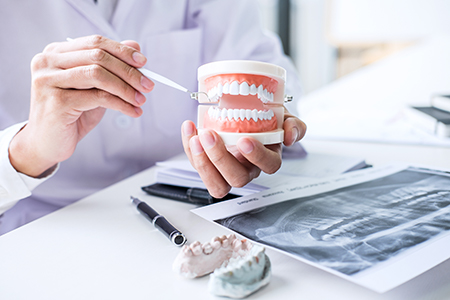
A predictable denture outcome depends on careful planning. This includes a medical and dental history review, a clinical exam, and when appropriate, imaging to assess bone and soft tissue anatomy. These steps guide decisions about preparation, extractions, and whether auxiliary procedures will improve the final fit.
Preparation may involve shaping tissues for a better prosthetic seat or addressing periodontal concerns before the denture is made. When implants are part of the plan, the sequence is coordinated so the final denture integrates properly with the implant attachments.
Precision in the laboratory phase — from impressions and bite records to tooth selection and try-ins — also plays a crucial role. Each visit is an opportunity to refine fit, appearance, and function so the finished denture meets the expected clinical goals.

Transitioning to a new denture typically involves an adjustment period. Speaking and chewing may feel different at first; gentle practice and short, frequent wearing periods help the muscles of the mouth adapt. Mild changes in saliva and temporary soreness are common and usually resolve with small adjustments.
Adjusting to wearing a new denture
Some patients require one or more post-delivery adjustments to relieve sore spots and fine-tune fit. If you experience persistent discomfort, an adjustment visit allows the clinician to make precise modifications.
Temporary changes in saliva
An increase in saliva production after receiving a denture is a normal, short-lived response. As the mouth becomes accustomed to the new appliance, saliva typically returns to baseline levels.
Regaining confident speech
Practice helps ease speech changes. Reading aloud or conversing regularly accelerates the process of speaking naturally with a denture.
Eating with your denture
Start with softer foods and cut items into smaller pieces as you rebuild chewing ability. Avoid favoring one side and introduce more challenging textures gradually to regain comfortable, balanced chewing.
Denture hygiene and nightly care
Rinse and brush your dentures daily to remove food particles and prevent staining. Use a brush intended for dentures and soak them as recommended to maintain cleanliness.
Clean any remaining natural teeth, gums, and the roof of the mouth gently to keep tissues healthy. This practice helps reduce the risk of irritation and infection.
Remove dentures at night to allow the gums and jawbone to rest and to reduce irritation. Proper nightly care supports long-term tissue health and comfort.
Stability options and follow-up
When additional retention is needed, options such as adhesives, special attachments, or implant support can be discussed. Regular follow-up visits ensure the denture continues to fit well and that oral tissues remain healthy.
Relines and ongoing maintenance
As underlying tissues change over time, relines or other maintenance procedures may be recommended to restore a comfortable fit. Routine evaluations help identify the right interval for these services.
Our team is committed to delivering thoughtful, individualized denture care. If you have questions about how dentures can help restore your smile and function, please contact us for more information.


Dentures are removable prosthetic devices designed to replace missing teeth and the surrounding gum tissue. They restore chewing function and provide facial support to maintain natural proportions of the lower face. Modern dentures are crafted to balance stability, comfort, and a natural appearance.
Materials and fabrication techniques have improved significantly, producing lighter bases and more lifelike teeth that fit more accurately than older designs. Dentures sit on the gums and underlying bone and can be held by suction, attachments, or implants depending on the design. Proper impressions, bite records, and laboratory work are essential for a denture that functions well and feels comfortable.
There are three primary categories of dentures: complete dentures, partial dentures, and implant-supported or implant-retained dentures. Complete dentures replace all teeth in an upper or lower arch and rely on the fit of the base and tissue support for retention. Partial dentures replace one or several teeth and typically attach to remaining natural teeth with clasps or precision connectors to preserve alignment and bite relationships.
Implant-supported dentures use dental implants as anchors to improve stability and chewing efficiency without converting the prosthesis into fixed bridgework. Overdentures are a subtype that rests on retained roots or abutments to preserve bone and enhance retention. Each type offers a different balance of convenience, stability, and tissue preservation, so selection is individualized to patient needs.
Candidacy for dentures depends on oral health, bone support, and personal goals for function and appearance. A comprehensive exam, including evaluation of remaining teeth, gum health, and jawbone anatomy, helps determine whether a full denture, partial denture, or implant-retained option is most appropriate. Medical history and overall health are also considered when planning surgical or restorative steps.
Patients who have multiple missing teeth, advanced decay, or generalized gum disease are often appropriate candidates for removable prostheses after necessary preparation. Those seeking greater stability may be evaluated for implant-retained solutions if bone volume and health permit. The decision is guided by clinical findings and the patient’s daily needs and preferences.
An immediate denture is placed on the same day that teeth are removed so the patient does not go without teeth during healing. Because tissues change as they heal, immediate dentures commonly require adjustments or relines to maintain fit after the jaw and gums remodel. A conventional denture is made after tissues have healed and may provide a more precise initial fit since contours are stable.
An overdenture rests on retained tooth roots or prepared abutments to improve retention and preserve bone in strategic areas. Overdentures can be supported by natural roots or by attachments connected to implants, combining the benefits of removable prostheses with increased stability. The timing and choice among these options depend on clinical needs and treatment sequencing.
Implant-supported dentures are secured to dental implants, which can dramatically reduce movement and improve chewing ability compared with conventional suction-retained prostheses. Because implants preserve stimulation to the jawbone, they can slow the bone loss that often follows tooth extraction, helping maintain facial support over time. Implant-retained options range from overdentures that snap onto implants to hybrid designs that are fixed in place.
Traditional removable dentures remain a reliable solution for many patients and allow for thorough cleaning of both the appliance and oral tissues. Implant-supported designs typically require planning for surgery and a healing period before final prosthesis attachment, but they often deliver greater confidence for speaking and eating. The choice depends on health status, bone anatomy, and the desired level of stability.
Adjustment to new dentures varies by individual but commonly takes several weeks of gradual adaptation. During the early period, speech and chewing may feel different and mild soreness or increased saliva production can occur as the mouth learns to accommodate the appliance. Short, frequent wearing periods and practice with speaking and eating help accelerate adaptation.
Most patients see steady improvement with time and minor post-delivery adjustments to relieve sore spots or refine fit. If persistent discomfort or functional problems continue, a follow-up visit allows the clinician to make precise corrections. Patient patience and adherence to care instructions play a large role in successful adaptation.
Daily denture hygiene helps prevent staining, odor, and tissue irritation while protecting any remaining natural teeth and gums. Rinse dentures after eating to remove debris, and brush them daily with a soft denture brush and nonabrasive cleanser to avoid surface wear. Clean the mouth thoroughly, including gums, tongue, and any remaining teeth, to maintain a healthy oral environment.
Soak dentures overnight in an appropriate solution when recommended to help keep them clean and hydrated, but follow product instructions and clinician guidance. Handle dentures carefully to avoid dropping and inspect them regularly for wear or damage. Regular professional checks ensure the appliance and oral tissues remain in good condition.
Dentures require periodic maintenance to preserve fit, function, and comfort as oral tissues change over time. Relines restore the contact between the denture base and the gums when resorption alters the supporting contours, and repairs may be needed if a denture cracks or a tooth becomes loose. Routine examinations allow the clinician to monitor tissue health, adjust occlusion, and recommend relining or replacement intervals.
Follow-up visits also provide an opportunity to evaluate options for enhanced retention such as attachments or implant support if stability becomes a concern. Keeping scheduled appointments helps prevent tissue irritation and identifies issues early, supporting long-term success with the prosthesis. Good home care between visits extends the useful life of the denture.
Dentures can alter tongue and lip positions, which may temporarily change how certain sounds are formed and how foods are managed in the mouth. Practicing speaking out loud, starting with simple phrases and progressing to conversation, helps the muscles retrain for clearer speech. When eating, begin with softer foods cut into small pieces and chew on both sides to distribute forces evenly as you regain confidence.
Over time, most patients return to a varied diet, especially when the denture fits well and occlusion is balanced. If persistent speech or chewing difficulties occur, adjustments to the denture or consideration of alternative retention strategies can improve function. Patience and gradual progression are key to rebuilding comfortable speech and mastication.
A predictable denture outcome begins with a comprehensive examination that includes medical and dental history, clinical assessment, and, when appropriate, imaging to evaluate bone and soft tissue anatomy. The process typically involves impressions, bite records, tooth selection, and try-ins to refine aesthetics and function before final delivery. When extractions or implant placement are part of the plan, the sequence is coordinated so the final prosthesis integrates properly with any surgical components.
Each clinical visit is an opportunity to refine fit and appearance, and the laboratory phase is essential for translating clinical records into a comfortable denture. At Ramsi Dental, the team emphasizes careful planning and collaboration with trusted dental labs to achieve reliable results tailored to each patient. Regular follow-up care helps maintain fit and identify when relines or adjustments are needed to sustain long-term comfort and performance.

We’d love to hear from you! Whether you have questions about our services, want to schedule an appointment, need guidance on your dental care, or simply want to learn more about how we can help you achieve a healthy, confident smile, our friendly and knowledgeable team is here to assist you.
Visit us at Ramsi Dental or reach out by phone or through our online form. We’re committed to making your experience easy, welcoming, and stress-free, and we’ll respond promptly to ensure you get the care you need.